Need some free safety meeting topics?
Lockout Tagout (LOTO) – OSHA
$29.99
Few things on a jobsite are as unforgiving as uncontrolled energy. Electrical, hydraulic, thermal, mechanical, and stored energy can kill or maim in an instant
Need some free safety meeting topics?
Workplace Posters and Tools for Safety Pros
Workplace Posters and Tools for Safety Pros
Need some free safety meeting topics?
$29.99
Few things on a jobsite are as unforgiving as uncontrolled energy. Electrical, hydraulic, thermal, mechanical, and stored energy can kill or maim in an instant

Dangerous energy shows up in many forms: electrical current, hydraulic pressure, heat, mechanical motion, gravity, and more. Any of them can kill or cause injuries like electrocution, burns, amputations, and crushing wounds if released without control. Most of these incidents come down to the same causes: a machine that started unexpectedly, stored energy that was never bled off, or equipment that was never properly locked and tagged before someone started working on it.
Lockout/tagout procedures, required under the federal standard 29 CFR 1910.147, isolate energy sources and make them inoperative so servicing and maintenance can be done safely. This course covers the roles involved, the kinds of energy you will face, and the step-by-step procedures for controlling them.
This course includes the following topics:
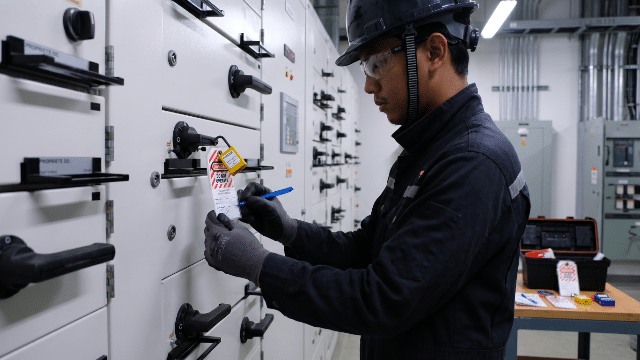
By the end of this course, you will be able to:
Every year, workers are killed or maimed because a machine they thought was off suddenly started, or because pressure trapped in a line released without warning. These are not freak accidents. They follow a pattern: someone skipped the lock, assumed someone else had isolated the energy, or did not recognize a stored energy source in the first place.
If you service, maintain, clean, or work around industrial equipment, lockout/tagout is not optional paperwork. It is the physical barrier between you and a machine that can start on its own. This course is for authorized employees who apply the locks, affected employees who work near the equipment, and supervisors who write and enforce the procedures.
Course details (as of October 2026): This course takes about 75 minutes to complete. You need a score of 80% to pass, and you have three attempts at the final test.