Need some free safety meeting topics?
Hydrogen Sulfide (H2S) – The Silent Killer
Online workplace safety training now available!
Browse our collection of high-quality online worker safety training courses. Convenient, cost-effective, and effective online safety training!

Hydrogen Sulfide (H2S) – The Silent Killer Free Tailgate Safety Meeting Topic
Why are we talking about Hydrogen Sulfide gas today? Hydrogen sulfide (H₂S) is one of the leading causes of gas-related deaths in workplaces. It is colorless, highly toxic, flammable, and can kill quickly—even in small amounts. Many workers have died because they didn’t recognize the danger or tried to rescue someone without proper protection.
What are the characteristics of Hydrogen Sulfide (H₂S)?
- Colorless gas with a characteristic “rotten egg” smell at low concentrations.
- Heavier than air → collects in low-lying areas, trenches, pits, manholes, tanks, vessels, sewers, and confined spaces.
- Smell can disappear quickly at higher concentrations due to olfactory fatigue (you lose the ability to smell it).
- Produced naturally in crude oil, natural gas, decaying organic matter, wastewater, manure pits, volcanoes, and some industrial processes.
Health Effects – Know the Symptoms by Concentration
(ppm = parts per million)
- 0.01–1.5 ppm — Rotten egg odor detectable.
- 2–20 ppm — Eye irritation, sore throat, headache, nausea. OSHA ceiling limit in general industry is 20 ppm.
- 10–50 ppm — Loss of smell starts, coughing, fatigue, dizziness. (NIOSH recommends no more than 10 ppm ceiling.)
- 100 ppm — Immediate danger to life & health (IDLH); severe eye/respiratory irritation, loss of smell, possible unconsciousness.
- 300–700 ppm — Collapse in minutes, eye damage, death in 30–60 minutes if not rescued.
- 700+ ppm — Immediate collapse, unconsciousness, death in 1–2 breaths or minutes.
High exposures can cause pulmonary edema (fluid in lungs) hours later—even if you feel okay at first.
Key Hazards of Hydrogen Sulfide Gas
- Extremely toxic and fatal if inhaled in high concentrations.
- Can travel along the ground or collect in confined spaces.
- Extremely flammable/explosive in certain concentrations.
- Deadliest when it knocks you out so you can’t escape or call for help.
- “Knock-down” effect: one breath at very high levels → instant collapse.
Safe Work Practices – What We Must Do
- Never trust your nose alone — Smell can fail you.
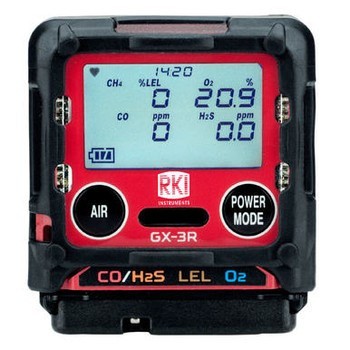
- Use approved H₂S detectors — Personal monitors in breathing zone + fixed monitors where required. Calibrate/bump test daily.
- Follow site-specific H₂S contingency plan — Know alarm levels, wind direction, muster points, and evacuation routes.
- Buddy system — Never work alone in suspected H₂S areas.
- Ventilation — Use mechanical ventilation to dilute/remove gas in confined spaces.
- PPE/Respiratory Protection
- Low levels (up to ~10–20 ppm) → Air-purifying respirator (if allowed by site policy).
- Higher levels or unknown → Supplied-air respirator (SCBA or airline system).
- Eye protection (goggles) — H₂S irritates eyes badly.
- No contact lenses (they can trap gas against the eye).
- No rescue attempts without proper equipment — Many deaths occur during “hero” rescues. Call emergency responders trained in H₂S.
- No ignition sources — No smoking, open flames, or hot work without gas testing.
- If you smell rotten eggs or detector alarms → Leave area immediately (upwind/uphill), notify supervisor, do NOT re-enter without authorization.
Emergency Response – Quick Actions for Hydrogen Sulfide Emergencies
- Evacuate → Fresh air / muster point.
- If someone is down → Do NOT enter without SCBA. Call emergency services immediately.
- Provide fresh air / rescue breathing only if you are trained and protected.
- Get medical help even for mild exposure — symptoms can worsen later.
Questions for the group (discuss briefly):
- Where on this site could H₂S be present?
- What does our H₂S monitor alarm sound like?
- What are the two muster points / safe zones?
- Who is trained in SCBA rescue on this crew?
Final reminders H₂S doesn’t give second chances. Respect every alarm, monitor, and rotten-egg smell. Your life—and your buddy’s life—depends on it.
-
 2026 Labor Law Poster State and Federal Combo$33.99
 -
Product on sale
 Heat Illness Prevention PlanOriginal price was: $39.99.$29.99Current price is: $29.99.
 -
Product on sale
 Injury/Illness Prevention Program (IIPP)Original price was: $49.99.$39.99Current price is: $39.99.