Need some free safety meeting topics?

Hydrogen Sulfide (H2S) Safety (OSHA)
Hydrogen Sulfide (H2S) Safety (OSHA)
$62.99
Hydrogen sulfide is colorless, heavier than air, and extremely toxic — and there’s no cure for exposure, which is why knowledge and the right equipment are everything. This 90-minute course covers H2S and sulfur dioxide, the dangerous gases found in oil and gas, chemical plants, paper mills, and water treatment.

Certificate PDF Issued Upon Completion
Satisfaction Guaranteed
100% Online Safety Course
Hydrogen Sulfide (H2S) Safety (OSHA) Training Course Description
Hydrogen sulfide and sulfur dioxide are dangerous gases found across many industries, including oil and gas, chemical manufacturing, paper mills, and water treatment. Hydrogen sulfide is colorless, heavier than air, and extremely toxic, and it forms sulfur dioxide when burned. Because no cure exists for exposure, knowledge, the right equipment, and proper training are what protect workers.
This course walks you through the characteristics of these gases, the controls and equipment used to manage them, and the steps to take in an emergency.
Course Content
This course includes the following topics:
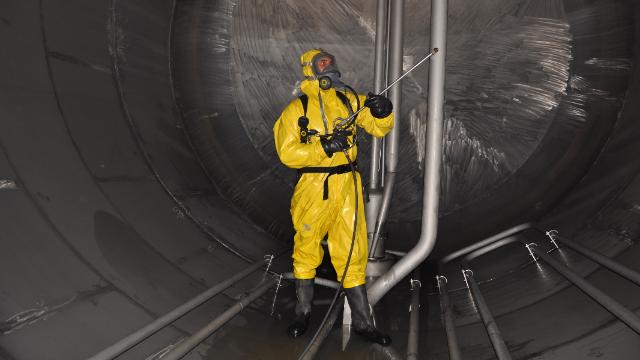
- The characteristics and hazards of hydrogen sulfide
- Preventing H2S exposure on the job
- Gas detection devices and how they work
- Respiratory protective equipment for H2S
- Emergency response strategies
- A summary of sulfur dioxide hazards
What You Will Learn
By the end of this course, you will be able to:
- Define hydrogen sulfide and sulfur dioxide and describe their properties
- Recognize the health effects of exposure to these gases
- Identify the engineering and administrative controls that prevent exposure
- Understand how gas detection equipment works
- Explain the emergency response steps when exposure occurs
Why H2S Safety Training Saves Lives
Hydrogen sulfide is one of the most dangerous gases workers can encounter because it kills the sense of smell at the very concentrations that become lethal. A worker who stops smelling the rotten-egg odor may think the danger has passed when it has actually become deadly. There is no antidote for H2S exposure, which is why detection equipment, respiratory protection, and practiced emergency response are the only things standing between workers and tragedy.
This course is for workers in oil and gas, chemical plants, paper mills, wastewater treatment, and any facility where H2S or sulfur dioxide may be present. It covers the properties of these gases, the controls and equipment used to manage them, and the emergency steps to take when exposure happens.
Course details (as of October 2026): This course takes about 90 minutes to complete. You need a score of 80% to pass, and you have three attempts at the final test.