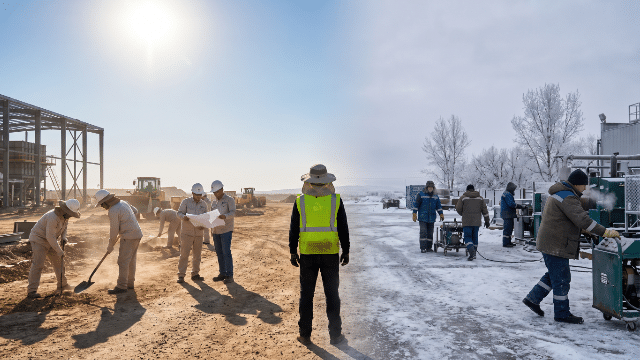
Heat and cold are both recognized workplace hazards, and both can turn a normal shift into a medical emergency fast — but most of these injuries are preventable if you catch the early warning signs. This one-hour awareness course explains how the body regulates temperature and teaches you to recognize heat exhaustion, heat stroke, hypothermia, frostbite, and trench foot.
Heat and Cold Stress (OSHA) Training Course Description
Both heat and cold are recognized workplace hazards, and either one can seriously harm anyone working outside or in a space without climate control. The good news is that most of these injuries can be prevented when you learn to spot the early warning signs and take simple action before a rough day turns into an emergency.
This awareness course helps you recognize heat and cold hazards, respond at a basic level, and summon help quickly when it matters.
Course Content
This course includes the following topics:
How your body controls its temperature
Heat stress: the hazards and how to spot them
Heat exhaustion versus heat stroke: knowing the difference
Cold stress: the hazards and how to spot them
Hypothermia and how it progresses
Localized cold injuries: frostbite, trench foot, and more
Preventing heat illness: water, rest, and shade
Preventing cold injury: layering, staying dry, and warming up
Emergency response and communication on the job
When to call 911
What You Will Learn
By the end of this course, you will be able to:
Describe how your body regulates its temperature
Recognize the early warning signs of heat and cold illness
Tell heat exhaustion apart from heat stroke
Name prevention measures for both heat and cold exposure
List the emergency steps to take, including when to call 911
Why Heat and Cold Stress Awareness Matters
Heat illness kills workers who thought they could push through one more hour. Cold injuries take fingers and toes from workers who did not recognize the early signs. Both are preventable, and both come down to the same thing: knowing what your body is telling you and acting before a bad day becomes a medical emergency.
This awareness-level course is for anyone working outdoors or in buildings without climate control: construction crews, roofers, landscapers, agricultural workers, warehouse staff in unconditioned spaces, and winter road crews. It teaches you to recognize heat and cold hazards, take basic protective action, and get help fast when someone is in trouble.
Course details (as of October 2026): This course takes about 60 minutes to complete. You need a score of 80% to pass, and you have three attempts at the final test.