Need some free safety meeting topics?
HAZMAT Safety Basics
Online workplace safety training now available!
Browse our collection of high-quality online worker safety training courses. Convenient, cost-effective, and effective online safety training!

HAZMAT Safety Basics Free Toolbox Safety Talk
Good morning, team. Today we’re talking about HAZMAT safety — hazardous materials we encounter on the job, whether in construction, maintenance, transportation, or general operations. These include chemicals, fuels, paints, solvents, batteries, gases, and more. Mishandling them can cause burns, poisoning, fires, explosions, long-term illnesses, or even fatalities.
Why this matters right now We work around fuels, cleaners, adhesives, welding gases, and other substances daily. OSHA reports thousands of chemical-related incidents yearly, including recent cases of explosions from improper gas handling, asphyxiation from refrigerant leaks, and poisoning from acid mixtures. Proper awareness prevents these.
HAZMAT Key Definitions
- Hazardous Material (HAZMAT): Any substance that poses an unreasonable risk to health, safety, property, or the environment when transported, stored, or used.
- Regulated under OSHA Hazard Communication Standard (HazCom / 1910.1200) and DOT rules for transportation.
The Nine HAZMAT Hazard Classes (Quick Review)
- Explosives
- Gases (flammable, non-flammable, poisonous)
- Flammable Liquids (e.g., gasoline)
- Flammable Solids / Dangerous When Wet
- Oxidizers / Organic Peroxides
- Toxic / Infectious Substances
- Radioactive
- Corrosives (e.g., acids, battery acid)
- Miscellaneous (e.g., lithium batteries, dry ice)
How Hazards Reach You (Exposure Routes)
- Inhalation — Breathing vapors, dusts, mists, or fumes
- Skin/Eye Contact — Splashes, absorption through cuts
- Ingestion — Swallowing (e.g., contaminated hands/food)
- Injection — High-pressure leaks or sharps
Acute vs. Chronic Effects
- Acute: Immediate — burns, dizziness, nausea, asphyxiation
- Chronic: Long-term — cancer, organ damage, respiratory disease, reproductive issues
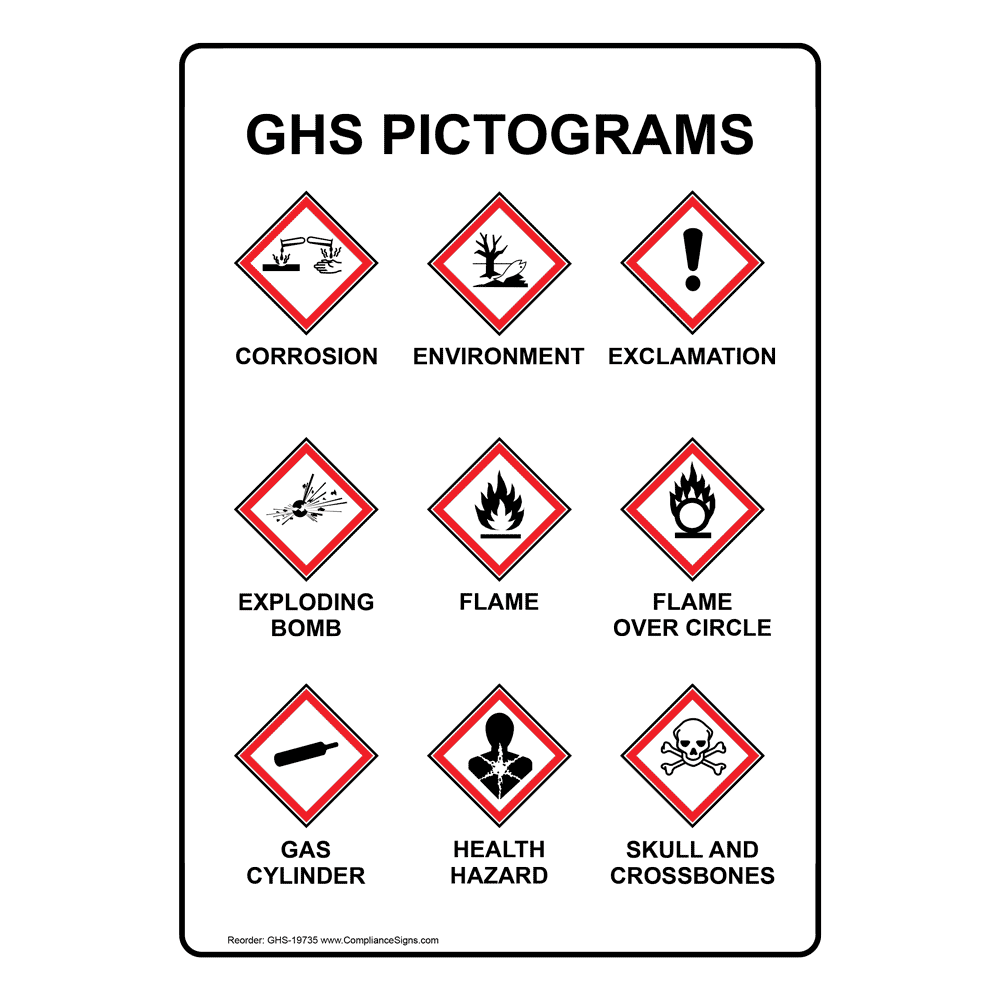
GHS Labels & Pictograms – Know What They Mean
Look for these diamond-shaped symbols on containers:
- Flame → Flammable
- Skull & Crossbones → Toxic / Poison
- Corrosion → Corrosive to skin/metal
- Exclamation Mark → Irritant / Health hazard
- Health Hazard (person silhouette) → Carcinogen, mutagen, etc.
- Gas Cylinder → Gases under pressure
- Flame Over Circle → Oxidizer
- Environment (dead fish/tree) → Aquatic hazard
Safety Data Sheets (SDS)
Your #1 Resource Every hazardous chemical must have an up-to-date SDS available. It tells you:
- Identification & hazards
- First-aid measures
- Fire-fighting info
- Accidental release procedures
- Handling & storage
- Exposure controls / PPE
- Physical/chemical properties
Top HAZMAT Safety Rules – Follow These Every Time
- Read the label and SDS before using ANY chemical.
- Use the least hazardous substance possible (substitution).
- Wear required PPE — gloves, goggles, respirators, coveralls, etc. Make sure it’s the right type and fits properly.
- Ensure good ventilation — never work in confined spaces without testing air quality.
- Store properly — separate incompatibles (acids from bases, flammables away from oxidizers), label everything, keep areas clean and clutter-free.
- No eating, drinking, or smoking near hazardous materials.
- Wash hands/face thoroughly after handling — before eating or leaving the site.
- Report issues immediately — damaged containers, spills, strange odors, missing labels.
- Know spill response — contain if safe, evacuate if needed, call supervisor/emergency contact.
- Never mix chemicals unless trained and authorized.
Real Incident Examples (Lessons Learned)
- Welder injured in gas explosion from improper torch setup.
- Worker died from H₂S/CO poisoning after pouring acid into drains.
- Asphyxiation from freon leak during chiller inspection.
These happened because of poor training, ignored procedures, or lack of PPE/ventilation.
HAZMAT Emergency Actions
- Spill/Release → Stop source if safe → Evacuate → Notify supervisor → Use spill kit if trained.
- Exposure → Remove from area → Remove contaminated clothing → Flush skin/eyes 15+ minutes → Seek medical help.
- Fire → Evacuate → Use appropriate extinguisher only if trained and safe.
- Emergency number: Call 911 or site emergency contact.
Questions for the group
- What hazardous materials do we use here?
- Where are the SDS located?
- What PPE do you need for [specific task/material]?
- Any near-misses or concerns you’ve seen lately?
Bottom line Hazmat safety isn’t optional — it’s how we go home safe every day. Know your materials, use controls and PPE, speak up if something looks wrong.
-
 2026 Labor Law Poster State and Federal Combo$33.99
 -
Product on sale
 Heat Illness Prevention PlanOriginal price was: $39.99.$29.99Current price is: $29.99.
 -
Product on sale
 Injury/Illness Prevention Program (IIPP)Original price was: $49.99.$39.99Current price is: $39.99.