This three-part, five-hour course gives Class III and Class IV asbestos workers the knowledge to identify asbestos hazards and keep exposure under control. Part one covers recognizing asbestos, where it’s commonly found, which operations create exposure, the health effects, and the work practices that reduce risk.
Asbestos Awareness (Three-Part) Training Course Description
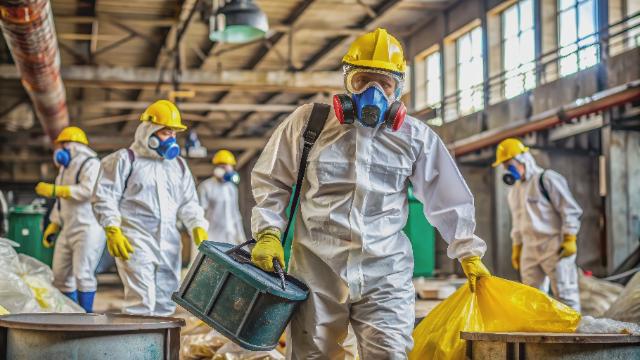
Taken in its entirety, this three-part online course gives Class III and Class IV asbestos workers the knowledge and skills to identify asbestos hazards and to prevent and control exposure. After completing it, you should understand the hazards of asbestos, the kinds of work that can release fibers into the air, and why protective controls including work practices, engineering controls, and respiratory protection matter so much.
Course Content
This course includes the following topics:
Part 1 – Recognizing asbestos and where it is commonly found
Part 1 – Work operations that can release asbestos fibers
Part 1 – The health effects of breathing asbestos
Part 1 – Precautions and work practices that prevent exposure
Part 2 – Asbestos exposure limits
Part 2 – Monitoring and medical surveillance
Part 2 – Engineering controls and work practices that reduce exposure
Part 2 – Personal protective equipment for asbestos work
Part 2 – What to do when asbestos is released
Part 3 – What the Respiratory Protection Standard requires
Part 3 – What SCBA, airline, and air-purifying respirators can and cannot do
Part 3 – Maintaining respirators: inspecting, cleaning, and storing them
Part 3 – Recognizing the signs of respirator failure
Why Asbestos Awareness Training Is Critical
Asbestos kills silently and slowly. The fibers that cause mesothelioma and asbestosis are invisible, and the diseases they cause show up decades after exposure. That is why awareness training matters even for workers who never expect to touch the stuff: the custodian drilling into a ceiling, the maintenance tech cutting into old pipe insulation, the renovator tearing out flooring. If the building predates the 1980s, asbestos may be present, and disturbing it without precautions is how exposures happen.
Taken in full, this three-part course is designed for Class III and Class IV asbestos workers. It builds from recognizing the hazard, through the controls that prevent exposure, to the respiratory protection that guards the lungs when other controls are not enough.
Course details (as of October 2026): This three-part course takes about 5 hours to complete in total. A score of 80% is required to pass, and you may take the course up to three times to reach the pass mark.