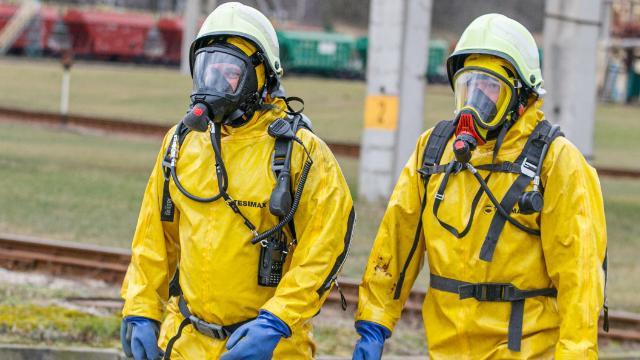
From silica dust to chemical vapors to oxygen-deficient spaces, respiratory hazards show up in every industry — and when they’re present, workers need NIOSH-certified protection that actually fits. This one-hour course covers the hazards respirators guard against and the types available: air-purifying respirators with filters and cartridges, atmosphere-supplying units, SCBAs, and combination units.
Respiratory Protection – OSHA Training Course Description
Breathing hazards take many forms, from ordinary dust and fumes to atmospheres without enough oxygen, and they turn up on jobsites across a wide range of industries. Where these hazards exist, workers must wear respiratory protection certified by the National Institute for Occupational Safety and Health (NIOSH).
This course covers the fundamentals: the hazards respirators guard against, the kinds of respirators available, and how to select, use, maintain, and store them correctly.
Air-purifying respirators: filters and chemical cartridges
Atmosphere-supplying respirators, SCBAs, and combination units
Filter classes and what protection levels mean
Fit testing and getting the right fit
Putting your respirator on correctly
User seal checks: negative pressure, positive pressure, and disposable models
Taking care of your respirator: inspection, filter changes, cleaning, and storage
What You Will Learn
By the end of this course, you will be able to:
Identify the respiratory hazards you may face at work and describe what they do
Tell the different types of respirators apart and know when each one is appropriate
Follow the basic steps for putting on and wearing your respirator correctly
Define a user seal check and perform one
Inspect your respirator, change filters and cartridges, clean it, and store it properly
Why Respiratory Protection Training Matters
Respiratory hazards do their damage quietly. Silica dust, welding fumes, solvent vapors, and oxygen-deficient spaces do not always trigger an immediate reaction, which is exactly why they are so dangerous. By the time symptoms appear, the exposure has already happened. The respirator on your face is only as good as your understanding of what it protects against and whether it actually fits.
This course is for workers who wear respirators on the job: painters, welders, abrasive blasters, chemical handlers, confined space entrants, and anyone working where dust, fumes, gases, or low oxygen may be present. It covers the OSHA respiratory protection basics that every respirator user needs, from selection through storage.
Course details (as of October 2026): This course takes about 60 minutes to complete. You need a score of 80% to pass, and you have three attempts at the final test.