A trench wall can collapse in seconds, and the weight of the soil that buries a worker is almost always unsurvivable — yet these incidents are nearly always preventable. This one-hour course gives workers and supervisors a solid foundation in excavation hazards, soil behavior, and the protective systems that keep people alive.
Excavation and Trench Safety – OSHA Training Course Description
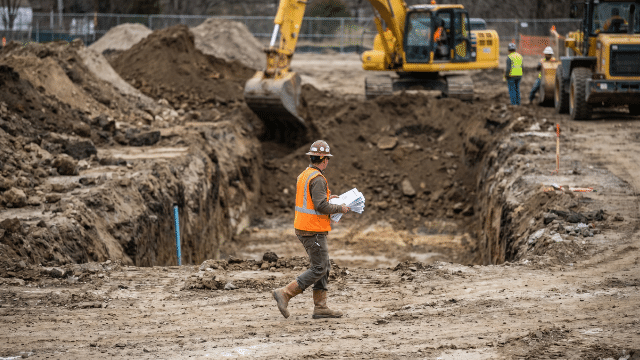
Digging and trenching rank among the most dangerous tasks in construction. A trench wall can collapse in seconds, and the weight of the soil that buries a worker is almost always unsurvivable. The good news is that these incidents are nearly always preventable when crews understand the hazards, use the right protective systems, and follow sound work practices.
This course gives workers and supervisors a solid foundation in excavation hazards, soil behavior, and the protective systems that keep people alive.
Course Content
This course includes the following topics:
What competency means and the role of the competent person
Soil classification, cohesiveness, and the basic soil types
How to test and classify soil in the field
Soil mechanics: the vertical and lateral pressures acting on a trench
How trenches fail: tension cracks, sliding, toppling, subsidence, bulging, heaving, and boiling
Precautions around trenches and dealing with water
Protective systems: shoring, shielding, and sloping or benching
Inspecting, installing, and removing shoring and shields
Rigging, equipment inspection, and lift capacity around excavations
Safe access and egress for workers in trenches
Atmospheric hazards and how to control them
Common hazards and the accident patterns that repeat
What You Will Learn
By the end of this course, you will be able to:
Define what competency means for excavation work
Describe what the competent person does on an excavation site
Identify and classify the basic soil types
Recognize the warning signs that a trench is about to fail
Describe the three kinds of protective systems and when to use each
Identify atmospheric hazards in excavations and how to control them
Recognize the common hazards and accident patterns in excavation work
Why Excavation Safety Training Is Critical
Trench collapses kill workers every year, and nearly all of those deaths were preventable. A cubic yard of soil can weigh as much as a car, and when a trench wall gives way, the worker at the bottom has no time to react. OSHA’s excavation standard exists because the physics are unforgiving: soil that looks solid in the morning can fail by afternoon after rain, vibration, or a surcharge load parked too close to the edge.
This course is for the people who work in and around trenches every day: laborers, pipe layers, equipment operators, foremen, and the competent persons who inspect excavations. It builds the foundation for recognizing unstable soil, choosing the right protective system, and understanding why the competent person’s judgment matters so much on every dig.
Course details: This course takes about 60 minutes to complete. You need a score of 80% to pass, and you have three attempts at the final test. Note: this is awareness-level training. It does not qualify as OSHA Outreach Training and does not provide certification or qualification as a competent or qualified person.