Need some free safety meeting topics?
Does Your Indoor Heat Illness Prevention Plan Actually Meet Section 3396?
Reviewed for accuracy August 2026 · Written by David Pease, First American Safety
If your indoor work areas reach 82°F, California requires you to have a written Indoor Heat Illness Prevention Plan — and it has since July 2024. Most of the plans I see aren’t wrong so much as incomplete: they cover water and rest breaks, and they’re missing the temperature measurement records and the control-measure hierarchy that Section 3396 actually requires. That gap is what turns an inspection into a citation.
Here’s what the standard requires, what employers keep missing, and how to check your own plan in about twenty minutes.
First: does 3396 even apply to you?
Section 3396 covers all indoor work areas where the temperature equals or exceeds 82°F while employees are present.
“Indoor” has a specific meaning here — a space under a ceiling or overhead covering that restricts airflow and is enclosed along its entire perimeter. That sweeps in a lot of workplaces people don’t think of as indoor heat problems: warehouses, fabrication shops, commercial kitchens, laundries, foundries, unconditioned storage mezzanines.
There are exemptions, and they’re narrower than employers hope:
- Telework locations not under the employer’s control
- Incidental heat exposure — under 15 minutes in any 60-minute period, at or above 82°F and below 95°F. Note the carve-out: this exemption does not apply to vehicles without effective and functioning air conditioning, or to shipping or intermodal containers during loading, unloading, or related work.
- Emergency operations to protect life or property
- Prisons and detention facilities operated by CDCR or local government
That incidental-exposure exemption is the one that gets misread most often. Fifteen minutes in any sixty. A worker who steps into an unconditioned warehouse four times an hour for five minutes each time is at twenty minutes, and the exemption is gone.
The two temperature thresholds that matter
This is the part plans most often get wrong, because there are two triggers and they do different things.
82°F — the core of the standard applies: water, cool-down areas, emergency response, acclimatization, training, and the written plan.
87°F — either the temperature or the heat index reaching 87°F — subsection (e) kicks in: assessment, measurement, recordkeeping, and mandatory control measures.
82°F, third case — subsection (e) also applies at just 82°F where employees wear clothing that restricts heat removal, or work in a high radiant heat area.
And there’s a third case people miss. “High radiant heat area” has a definition too: a work area where globe temperature is at least 5°F greater than the air temperature. If you have workers in impermeable suits or standing near an oven, furnace, or kiln, you are in subsection (e) territory at 82°F, not 87°F.
What the standard requires, subsection by subsection
(c) Water
Potable drinking water, free of charge, as close as practicable to where employees are working, and in the cool-down areas.
Where water isn’t plumbed or otherwise continuously supplied, you must provide enough at the start of the shift for one quart per employee per hour for the entire shift — or start with a smaller quantity and have effective procedures for replenishing it during the shift, so that employees can still drink a quart or more per hour.
That second option is legitimate and the standard says so explicitly. What it isn’t is a licence to refill when somebody complains. Replenishment has to be a procedure you can describe, not a reaction.
(d) Cool-down areas
Blocked from direct sunlight and shielded from other high radiant heat sources to the extent feasible, and maintained below 82°F unless the employer can demonstrate it’s infeasible. It has to be big enough that everyone on a rest break can sit in a normal posture without touching each other.
Two employee-rights provisions here that supervisors need to know cold:
- Employees must be encouraged to take a preventative cool-down rest — not merely permitted
- An employee taking a cool-down rest shall not be ordered back to work until signs or symptoms have abated, and in no event less than five minutes — in addition to the time needed to access the cool-down area. Travel time to the cool-down area does not count toward the five minutes, which matters on a large site
In our experience, most workplaces already have an exiting break room or lunch room where employees already go to rest. As long as these spaces are adequately cooled and employees have space too cool down comfortably, they should be enough to meet the standard.
(e) Assessment and control measures
This is the subsection that’s missing from most plans I review.
Where it applies, you must measure both the temperature and the heat index and record whichever value is greater, along with the date, time, and specific location. Those records must be kept for 12 months, or until the next set of measurements, whichever is later.
Then you apply controls in a required order:
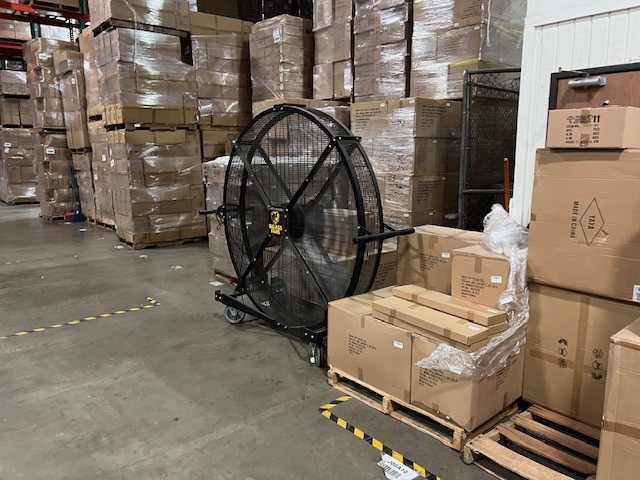
- Engineering controls first — bring the area below 87°F (or 82°F in the restrictive clothing / high radiant heat case). Ventilation, air conditioning, cooling fans, insulation, shielding of heat sources.
- Administrative controls if engineering controls can’t get you there — acclimatization, rotating employees, schedule changes, more rest breaks.
- Personal heat-protective equipment last — cooling vests, water-cooled garments.
The order is not a suggestion. If your plan jumps straight to “we give them cooling vests,” you’ve skipped two required tiers and an inspector will say so.
(f) Emergency response
You need procedures for maintaining effective communication so employees can reach a supervisor or emergency services; for responding to signs or symptoms of heat illness; and specifically for severe heat illness — the standard names decreased level of consciousness, staggering, vomiting, disorientation, irrational behavior, and convulsions.
And this line, which should be in your supervisor training verbatim: an employee exhibiting signs or symptoms of heat illness shall be monitored and shall not be left alone or sent home without being offered onsite first aid and/or emergency medical services.
Don’t drop the second half. Sending a symptomatic worker home to sleep it off is one of the most common real-world violations of this standard, and the regulation names it specifically.
(g) Acclimatization
Where no effective engineering controls are in use to control the effect of outdoor heat on indoor temperature, all employees must be closely observed by a supervisor or designee during a heat wave.
New employees require close observation for their first 14 days of employment if they’re assigned to any area meeting the subsection (e) triggers — temperature or heat index at or above 87°F, or 82°F with heat-restrictive clothing or high radiant heat. It’s the same three triggers as subsection (e), not just the 87°F one.
(h) Training
Employees must be trained before they begin work; supervisors before they supervise. Employee training covers risk factors, your procedures, employee rights, the types and symptoms of heat illness and first aid, and the importance of drinking small quantities of water frequently — the standard says up to four cups per hour. Supervisor training adds implementation, emergency response, and — where the work area is affected by outdoor temperatures — how to monitor weather reports and respond to hot weather advisories.
(i) The written plan itself
In writing, in English and in the language understood by the majority of employees, and it must contain your procedures for:
- Providing water
- Access to cool-down areas
- Measurement and control of temperature and heat index (subsection e)
- Emergency response
- Acclimatization
It can live inside your IIPP under Section 3203, inside your outdoor Heat Illness Prevention Plan under Section 3395, or stand alone. All three are acceptable — and if you have both indoor and outdoor exposure, combining them is usually the cleaner option.
Don’t confuse this with the outdoor standard
Section 3395 covers outdoor work and has different numbers. Shade must be provided when temperatures exceed 80°F, high-heat procedures start at 95°F, and there’s a 14-day acclimatization provision.
If you have employees who move between indoor and outdoor work — most construction, landscaping, and delivery operations do — you need both plans, and your training has to cover both sets of thresholds. A plan that addresses only one is a common and easily cited gap.
We offer and easy-to-use template to develop a heat illness prevention plan specifically for outdoor workplaces in California.
A 20-minute self-check
Pull your written plan and confirm each of these is actually in it:
- ☐ Written in English and the language of the majority of your employees
- ☐ Water procedures specifying one quart per employee per hour for the full shift
- ☐ Cool-down area procedures, including the below-82°F requirement
- ☐ Temperature and heat index measurement procedures, with a record-keeping method
- ☐ Records retained 12 months or until next measurement
- ☐ Control measures in the required order: engineering → administrative → PPE
- ☐ Emergency response procedures naming severe heat illness signs
- ☐ The “shall not be left alone” instruction
- ☐ Acclimatization procedures, covering heat-wave observation and the 14-day new-employee observation across all three subsection (e) triggers
- ☐ Training records for every employee and supervisor, dated before they started work
- ☐ A companion outdoor plan under 3395 if any employee works outdoors
If more than two of those are missing, you don’t have a compliance document — you have a memo.
One of the most common problems with safety plans we come across is that employers will simply download a template or boilerplate program and then do nothing with it. Any written safety plan MUST be customized to fit your workplace. If you just download the Cal/OSHA model plan and don’t do anything to it, your program is not complete and you most-likely will be cited if an enforcement officer ever asks to see it.
What’s coming federally
Federal OSHA has a Heat Injury and Illness Prevention rulemaking underway. The comment period on the 2024 proposed rule closed in January 2025, informal hearings ran through mid-2025, and a supplemental proposal is expected before a final rule is set. There is no final federal standard yet, and no confirmed date for one.
For California employers this changes nothing today — 3395 and 3396 already apply, and in several respects go further than the federal proposal. Worth being precise, though: the federal NPRM’s initial heat trigger is lower than California’s indoor threshold, and its high-heat provisions include a prescriptive paid rest-break requirement that neither 3395 nor 3396 contains. A plan built to California’s standard is a strong starting point for whatever lands — not automatically a superset of it.
Get the plan right
We sell a Heat Illness Prevention Plan template built to Section 3396 and 3395, including the temperature measurement log and the training sign-off sheet — the two pieces most plans are missing. It’s the same document we use with our own consulting clients.
Get the Heat Illness Prevention Plan template →
If you’d rather have someone look at what you already have, we review plans and run inspection-readiness walkthroughs for Southern California employers. Contact David at DPease@DAESafety.com or call 909-459-9030.
Sources
- California Code of Regulations, Title 8, Section 3396 — Heat Illness Prevention in Indoor Places of Employment — dir.ca.gov/title8/3396.html
- California Code of Regulations, Title 8, Section 3395 — Heat Illness Prevention (outdoor) — dir.ca.gov/title8/3395.html
- Cal/OSHA Heat Illness Prevention Guidance and Resources — dir.ca.gov/dosh/heatillnessInfo.html
- Federal OSHA, Heat Injury and Illness Prevention Rulemaking — osha.gov/heat-exposure/rulemaking/
This article is general information, not legal advice, and requirements change. Verify current requirements against the regulation text or with Cal/OSHA Consultation Services before relying on it.